Purpose-Led Directors. Industry-Aligned Execution.
Built with modern systems, project rigor, and placement-first accountability.
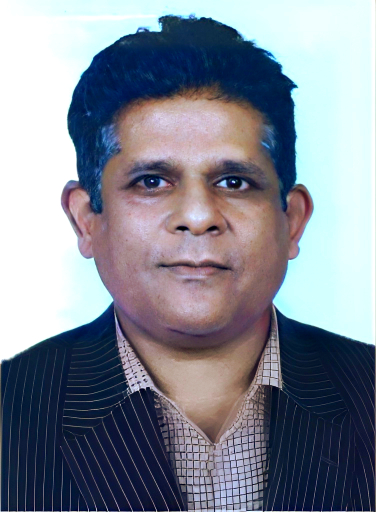
ER. Veer Bhatnagar
DirectorVeer leads institutional direction with a clear operating philosophy: technical education must be measurable, practical, and market-linked from day one. His leadership model is built around strong academic delivery, disciplined execution, and outcome visibility for students, parents, and partner colleges. He has consistently pushed teams to move beyond theoretical lectures and create applied, workshop-driven learning cycles where students can design, troubleshoot, present, and iterate like entry-level professionals. Under his direction, every major training track is mapped to role expectations in current industry hiring, ensuring students understand not only concepts but also where and how those concepts are used in real projects.
A defining part of Veer’s approach is systemization. Instead of depending on individual teaching styles alone, he promotes standardized delivery frameworks: weekly milestones, concept-to-lab progression, evaluation rubrics, attendance accountability, task logs, and feedback closure loops. This structure has helped improve learner consistency across different campuses and batches. He believes quality should not be accidental; it should be engineered into the program design. From curriculum planning meetings to trainer onboarding and academic audits, he emphasizes repeatable processes so that every student, regardless of location, receives the same seriousness of mentorship and project exposure.
Veer also places strong focus on employability layering. In his view, technical training without communication and interview readiness is incomplete. He has driven integration of mock interviews, resume clinics, presentation rounds, and confidence-building sessions into core training calendars rather than keeping them as optional add-ons. Students are encouraged to explain their projects in structured language, defend design choices, and document work in a recruiter-friendly format. This closes the gap between classroom capability and placement performance, especially for learners who have potential but lack industry-facing polish.
Partnership development is another area where Veer has contributed significantly. He has expanded collaborative engagement with colleges, faculty coordinators, and hiring stakeholders to create smoother transition paths from campus learning to job opportunities. His team regularly captures hiring trends, preferred tools, and role expectations from employers, then translates those signals into training updates. This keeps programs responsive rather than static. He treats curriculum updates as a continuous cycle, not a yearly event, because technology shifts quickly and students cannot afford outdated skill stacks.
From an operational perspective, Veer is known for balancing ambition with execution discipline. He pushes high standards but also ensures teams have clear ownership matrices, realistic timelines, and resource support. He insists on transparent reporting around batch performance, assignment completion, lab utilization, and placement outcomes. This data-led governance model helps identify gaps early and correct them before they become systemic problems. It also gives students confidence that training quality is being actively monitored, not assumed.
His long-term vision is to create a learning ecosystem where students are treated like future professionals from the start. That means punctuality, accountability, collaborative project behavior, and ethical work habits are taught alongside technical tools. He believes that employability is not only a function of coding, design, or engineering knowledge; it is equally shaped by reliability, communication, adaptability, and execution mindset. By embedding these habits into daily training routines, he aims to produce graduates who are both technically capable and workplace-ready.
Veer’s message to learners remains consistent: focus on fundamentals, practice deliberately, and build proof of work. Certifications help, but project depth and problem-solving clarity are what create lasting career momentum. With this philosophy, he continues to steer programs toward practical excellence, ensuring that students leave with confidence, competence, and a clear path into professional roles.

Dr. Jaya Bhatnagar
DirectorJaya provides strategic leadership with a strong emphasis on learner transformation and execution quality. Her approach begins with a simple principle: students should not just complete a course, they should evolve into confident professionals who can contribute from the first day of employment. To achieve this, she has helped shape training models that combine concept clarity, guided practice, mentor feedback, and career-readiness checkpoints in one integrated journey. She is deeply focused on how students experience the program week by week, and she continuously works to remove friction points that reduce engagement or learning depth.
One of Jaya’s key strengths is her ability to align academic planning with student psychology. She understands that many learners struggle not because of lack of intelligence, but because of inconsistent structure, low confidence, and unclear progression paths. Under her direction, programs are broken into manageable stages with visible milestones so students can track growth and stay motivated. She supports a mentoring culture where trainers are encouraged to identify individual learning blocks early and provide timely interventions through revision sessions, practice drills, and one-on-one guidance.
Jaya has also played an important role in building quality assurance mechanisms across delivery teams. She advocates for regular content audits, standardized assessments, session feedback reviews, and trainer calibration meetings to maintain uniform teaching standards. Her belief is that student outcomes improve when instructional quality is predictable and accountable. This has led to stronger consistency across batches, especially in high-demand domains where student volumes are large and delivery pressure is high.
Placement preparation is central to her leadership priorities. She has worked closely with academic and placement teams to ensure that technical modules are synchronized with interview timelines and recruiter expectations. Students are guided on practical task execution, project articulation, communication behavior, and professional etiquette. She encourages mock environments that simulate real hiring conditions so learners can build confidence before appearing in formal interviews. This structured preparation reduces anxiety and improves performance, particularly for first-time job seekers.
Jaya is equally committed to inclusion and student support culture. She actively promotes an environment where questions are welcomed, mistakes are treated as learning signals, and progress is celebrated through effort as well as outcomes. She believes respectful academic culture is a competitive advantage because it helps students stay committed through demanding phases of training. Her leadership has encouraged teams to communicate clearly, respond quickly, and maintain empathetic engagement while still holding students to high standards of discipline.
On the strategic side, Jaya contributes to long-term growth planning through program diversification, partner collaboration, and operational refinement. She supports expansion into high-value skill tracks while ensuring foundational programs remain robust and relevant. She also emphasizes data-informed decisions around retention, completion rates, and placement conversion so planning is anchored in evidence rather than assumptions. This balanced approach allows the organization to scale without compromising quality.
Her message to students is clear and practical: build strong fundamentals, practice consistently, document your work, and communicate your learning journey with confidence. She reminds learners that career success is not built in one exam or one interview, but through disciplined habits repeated over time. Through her leadership, the training ecosystem continues to become more structured, more supportive, and more aligned with real career outcomes.

Mrs. Renu Saxena
General ManagerRenu drives organizational execution as General Manager with a strong focus on operational reliability, student service quality, and cross-team coordination. Her role sits at the center of academic delivery, support operations, administration, and process governance, making her a key force behind daily performance. She believes that student success depends not only on good trainers and curriculum, but also on smooth systems that ensure timely communication, resource availability, schedule discipline, and consistent follow-through. Her management style combines precision, responsiveness, and accountability.
A major part of Renu’s contribution is process orchestration. She ensures that each training cycle runs with clear timelines, batch readiness checks, faculty coordination, and support workflows that minimize disruptions. From onboarding and attendance tracking to assignment monitoring and escalation resolution, she has helped formalize mechanisms that keep operations stable even during high-volume periods. Her approach reduces operational noise for trainers and students, allowing both groups to focus on actual learning outcomes rather than administrative confusion.
Renu is particularly attentive to service quality in student interactions. She has strengthened response systems for queries related to scheduling, sessions, assessments, certifications, and placement support. Her philosophy is simple: students should never feel uncertain about next steps. By improving communication clarity and turnaround time, she has enhanced learner trust and reduced drop-off risks. She treats support as a strategic function, not a back-office task, because sustained engagement is essential for completion and placement success.
She also works closely with academic leads to ensure execution integrity across batches. This includes classroom readiness, lab availability, trainer allocation, and checkpoint reviews that verify whether planned outcomes are being delivered on time. When gaps appear, she coordinates corrective actions quickly through focused intervention plans. Her operational discipline has improved consistency in program delivery and helped maintain quality standards during expansion phases.
Data visibility is another hallmark of Renu’s management framework. She promotes regular tracking of attendance patterns, assignment completion, assessment trends, and student feedback signals. These indicators are used to identify at-risk learners early and trigger support actions before disengagement becomes permanent. She advocates for evidence-led decision making across teams so improvements are timely, practical, and measurable. This analytical approach has helped leadership maintain stronger control over execution outcomes.
Renu is also instrumental in internal coordination and team culture. She aligns academic, operations, and support teams around shared priorities, defined responsibilities, and escalation clarity. Her leadership encourages ownership while maintaining collaborative problem-solving, which is critical in fast-paced training environments. She emphasizes professional communication, punctuality, and operational transparency as non-negotiable standards, believing that institutional credibility is built through daily consistency.
Her message to students and teams reflects her practical mindset: progress comes from discipline, clarity, and consistent effort. For students, she encourages regular attendance, active participation, and timely completion of practical work. For teams, she stresses responsiveness, accountability, and solution-oriented execution. Through her stewardship as General Manager, operational systems continue to become stronger, learner support more reliable, and program delivery more dependable across all centers.